Honest guide · checked 29 August 2026
Do GPS trackers stop dog theft? An honest answer
If you are asking whether GPS trackers prevent dog theft, you deserve a straight answer rather than a sales page. So here it is: no. A GPS tracker on a stolen dog can be removed in seconds, and no honest manufacturer claims otherwise. What a tracker can do is very different, and in the right circumstances genuinely valuable: it can tell you where your dog went in the first minutes after a theft, which is exactly when recovery is most likely. This guide separates the two, based on verified facts and our own test programme, now under way.
The honest answer: a recovery tool, not a theft shield
A GPS tracker attaches to a collar or harness, and the first thing an experienced thief does is remove exactly that. Once the collar is off, your tracker reports the location of a hedge, a bin or a lay-by, not your dog. This is not a controversial claim: even PitPat, which sells a GPS tracker, concedes on its own theft advice page that a tracker cannot physically stop a dog being stolen (their page, checked 29 August 2026). We think every tracker company should be that candid.
The context makes honesty important. As we set out in our dog theft UK statistics guide, 1,626 dogs were reported stolen in 2025 and only 344, about 21%, were recovered. A product that claims to prevent theft and does not is worse than useless, because it buys false confidence with a dog's safety. So we will not tell you a tracker makes your dog theft-proof. We will tell you what it actually does, and when that is worth paying for.
What a GPS tracker can genuinely do in a theft
Three things. They all live in the gap between your dog disappearing and the collar coming off.
Live location in the first minutes
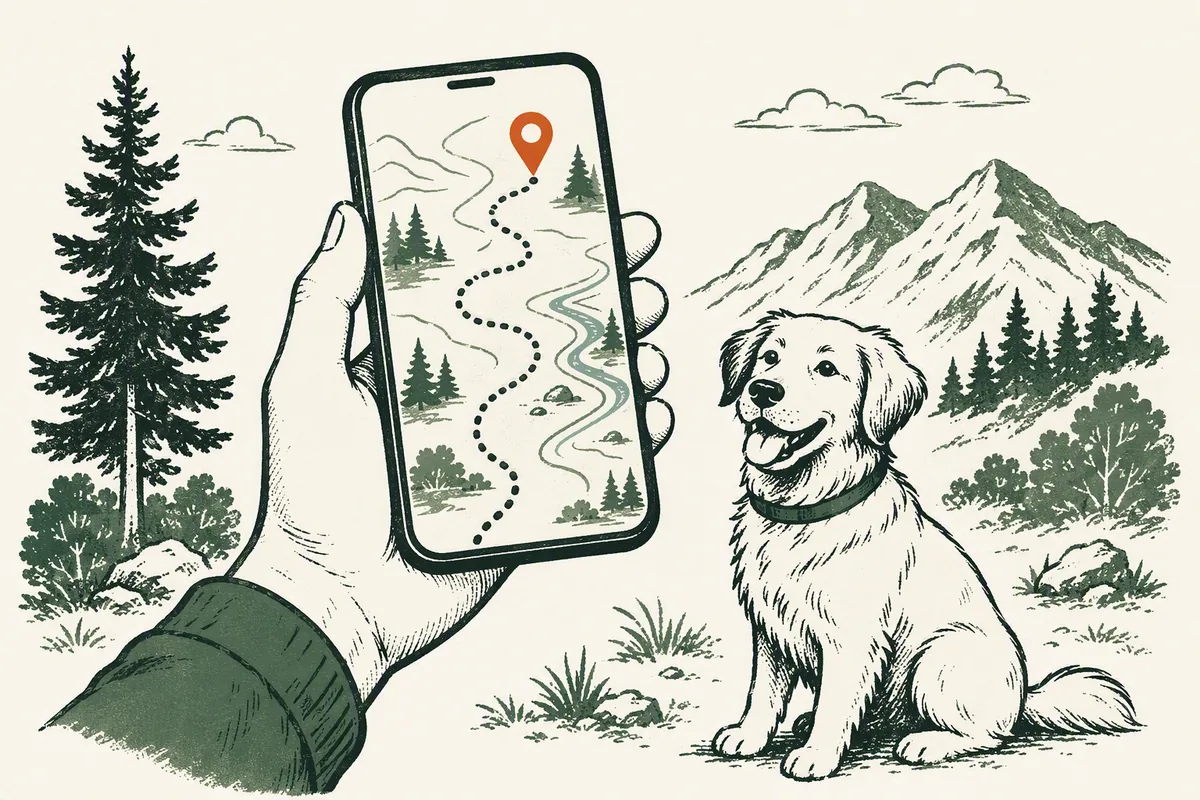
Until the tracker is found and removed, it reports where your dog is going: which direction, on foot or in a vehicle, towards which area. In an opportunist theft, the thief may not check the collar for a while, or at all. Those minutes of live data can be the difference between a search that starts at the right street and one that starts at zero. This is the strongest practical argument for a cellular GPS tracker over any Bluetooth tag. Our plain-language explainer on how dog GPS trackers work covers why.
Knowing within minutes, not hours
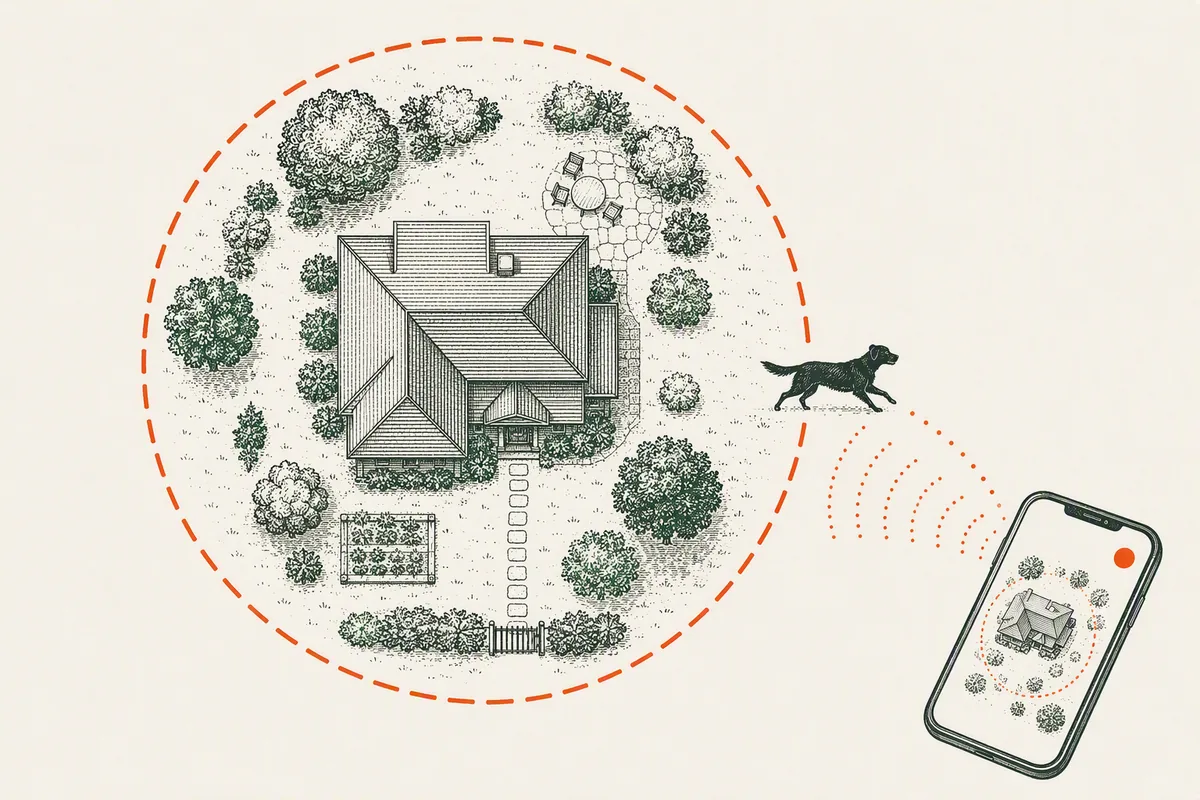
Most thefts start as an absence: the garden is quiet, the dog has not come back. A geofence (virtual fence) alert tells you your dog has left the garden while the event is still in progress. Owners regularly discover a theft an hour or more after the fact. An escape alert compresses that to minutes, and everything about recovery gets easier the earlier you start.
Evidence the police can use
Tracker apps keep timestamped location history. If your dog is stolen, screenshot everything immediately, report the crime and get a crime reference number, then hand the history over. In England and Northern Ireland the offence is dog abduction under the Pet Abduction Act 2024, with a maximum sentence of five years. A timestamped trail showing your dog moving away in a vehicle is exactly the sort of evidence that turns "lost dog" into a recorded crime. Do not use the live location to confront anyone yourself. Give it to the police.
Which tracker features matter for theft, and what we are testing
Judged as a theft recovery tool, four things matter, and marketing pages rarely quote the two most important ones:
- Escape alert latency: how long after your dog crosses the geofence the phone in your pocket actually buzzes. Minutes matter here.
- Live mode update rate: how often the position refreshes when you are actively tracking. A 2 to 3 second refresh and a 60 second refresh are very different tools when a dog is in a moving car.
- Network coverage: a cellular tracker is only as good as the signal where you walk.
- Battery discipline: a flat tracker is a decoration. Whatever you buy, charge it on a routine.
We are measuring the first two on our bench for both units we own, following the method in how we test. We do not publish numbers before we have them:
What about an AirTag as an anti-theft dog collar?
Searches for an anti theft dog collar in the UK often land on Apple AirTag collar holders, and the appeal is obvious: cheap, no subscription, easy to hide. But an AirTag is not a GPS tracker. It reports position only when an iPhone happens to pass nearby, has no live tracking, and, crucially for theft, iOS deliberately alerts nearby iPhone users that an unknown AirTag is travelling with them. A thief with an iPhone gets told your tag exists. The hideability is real. The tracking is not. We have set the two approaches against each other properly in our AirTag vs GPS dog tracker comparison.
Realistic prevention: the layers that matter more than any gadget
If theft is your main worry, the honest priority order puts habits above hardware:
- Never leave your dog unattended in public. Outside shops and in cars are recurring theft scenarios. No tracker fixes an unattended dog.
- Secure the garden and do not leave a dog out alone for long stretches, especially breeds with high resale value.
- Vary walk times and routes, and be guarded with strangers who probe about your dog's breeding status or worth.
- Keep microchip details current. The chip is the legal identifier that gets a recovered dog back to you. Stale contact details break the chain.
- Know your breed's risk profile. French Bulldogs, Staffordshire Bull Terriers, German Shepherds and Dachshunds all feature prominently in the 2025 figures. See our data page on the most stolen dog breeds in the UK.
- Then add the tracker, for the escape alert and the recovery window, with clear eyes about what it can and cannot do.
A tracker is the sixth layer. Not the first. It is also the only layer that helps after a theft has already happened, which is why we still recommend one.
If your dog is stolen while wearing a tracker
Act in this order, quickly:
- Open live tracking immediately and leave it running.
- Screenshot the location history now, before the collar is dumped and the trail goes cold on screen.
- Call 999 if the theft is in progress, 101 otherwise. Get a crime reference number and tell the police you have live location data. Ask how they want to receive it.
- Do not door-knock the pin yourself. The location may be wrong by tens of metres, the dog may already be elsewhere, and confronting a thief is dangerous. Let the police act on it.
- Flag the microchip as stolen and start the wider search in parallel. Our guide on how to find a lost dog covers the full sequence.
Trackers recover dogs when owners move fast and hand the police something concrete. That is the realistic promise. It is a real one.
Questions owners actually ask
Do GPS trackers prevent dog theft?
GPS trackers do not prevent dog theft. A thief can remove a collar in seconds, and honest makers, including PitPat on its own advice page, concede this. What a tracker provides is a live location in the first minutes after a theft, escape alerts, and a timestamped history you can hand to police.
Can you track a stolen dog with a GPS tracker?
You can track a stolen dog for as long as the tracker stays on the collar with battery and signal. That window is often short, so switch to live mode immediately, screenshot the location history, and pass everything to the police with your crime reference number rather than confronting anyone yourself.
What is the best GPS tracker to prevent dog theft in the UK?
No GPS tracker prevents theft, so we judge them as recovery tools: escape alert speed, live update rate and network coverage. Of the units on our bench, the Tractive DOG 6 and Pawfit 3s both offer geofence alerts and live tracking. Our timed alert benches are still in progress.
Will a thief know my dog is wearing a GPS tracker?
A GPS tracker is usually visible on the collar, so an experienced thief will look for one and remove it. An Apple AirTag is easier to hide, but iPhones automatically warn nearby people about unknown AirTags travelling with them, which can tip off any thief who carries an iPhone.